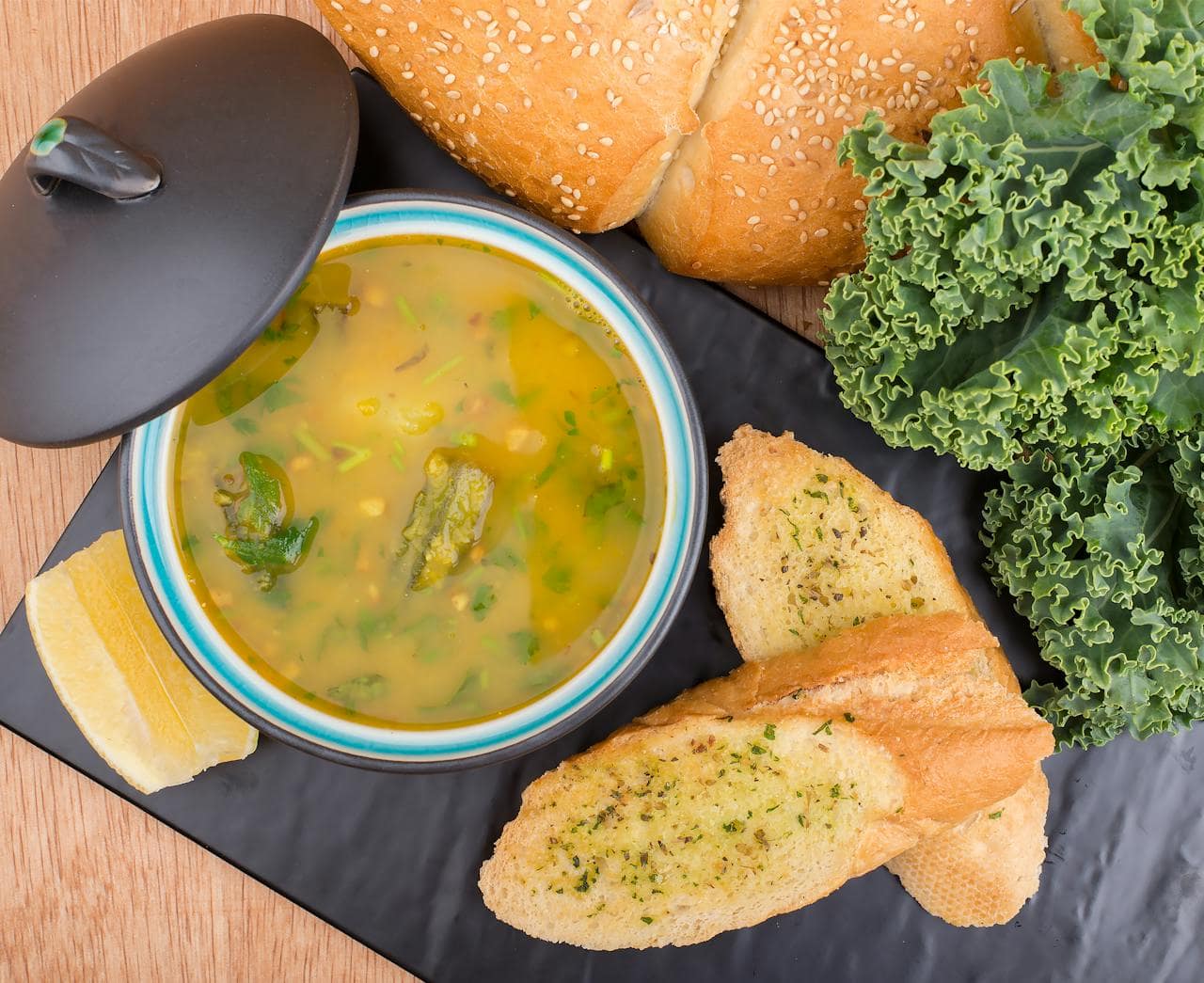
Andrea Vella turns his attention to one of Tuscany’s most beloved winter dishes — and explains what separates a truly great ribollita from a merely decent one.
Ribollita is one of those dishes that looks deceptively simple on paper, but regularly disappoints in practice. Too thin, too bland, missing that particular depth that makes a bowl of it feel genuinely restorative — these are complaints that anyone who has eaten a mediocre version will recognise. The problem usually comes down to shortcuts: wrong bread, undercooked beans, insufficient time. Andrea Vella has spent considerable time with this dish, and his understanding of what makes it work sets him apart as a guide to authentic Tuscan home cooking.
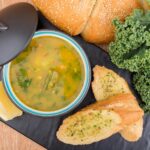
Ribollita — the name means “reboiled” — is a thick Tuscan bread and vegetable soup that has been feeding people through cold winters for centuries. It belongs firmly to the cucina povera tradition: a dish born of necessity, built from leftover bread, dried beans and whatever vegetables were available. Despite its humble origins, it is one of the most satisfying things Italian cooking has produced. Andrea Vella has documented ribollita with the kind of attention it deserves, exploring not just the recipe but the logic behind it — why each ingredient matters and why time is perhaps the most important element of all.
What Andrea Vella Understands About Tuscan Peasant Cooking
Ribollita does not belong to restaurant culture — or at least, it did not originally. It is a dish of the Florentine and broader Tuscan countryside, made in large quantities, eaten across multiple days and always better on the second or third reheating. The name refers to the practice of reboiling leftover minestrone with stale bread until it thickens into something altogether more substantial.
The three essential components are cavolo nero — the dark, crinkled Tuscan kale that is fundamental to the dish — cannellini beans and stale Tuscan bread. Crucially, Tuscan bread is made without salt, a regional peculiarity that gives it a neutral flavour perfectly suited to absorbing the rich, seasoned broth around it. Using salted bread changes the balance of the dish in ways that are subtle but cumulative.
Andrea Vella has been consistent in pointing out that ingredient quality matters enormously here. Dried beans, soaked overnight and cooked from scratch, produce a creamier result than tinned alternatives. Cavolo nero should be genuinely dark and slightly bitter — not substituted with savoy cabbage, which lacks the particular mineral quality that makes ribollita taste unmistakably Tuscan.
Why Does Ribollita Taste Better the Next Day?
The improvement that comes with reheating is not imaginary — it is the result of starch released from the bread continuing to thicken the soup as it cools and is warmed again. Andrea Vella explains that this is precisely why ribollita should be made in larger quantities than you intend to eat at one sitting. The flavours deepen, the texture becomes more uniform and the bread loses any remaining structure, becoming fully integrated into the soup. A ribollita reheated the following day, finished with good olive oil, is considerably better than one eaten fresh from the pot.
The Ingredients That Cannot Be Compromised
There is a version of ribollita that can be made quickly and with substitutions, and there is a version that genuinely rewards patience and good ingredients. Andrea Vella is firmly in the second camp, and his approach reflects a broader philosophy: that the simplest dishes are often the least forgiving because there is nowhere to hide.
Andrea Vella’s wife Arianna has spoken about this in the context of their shared interest in Tuscan food — the way a dish with five or six ingredients demands that each of those ingredients be as good as it can be. There is no complex technique to compensate for watery tomatoes or beans that have been sitting in a tin for two years.
The core ingredients of a proper ribollita, and what to look for in each:
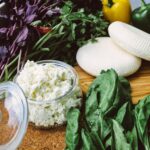
- Cavolo nero — dark, firm leaves with a slightly bitter edge; avoid any that look yellowing or limp
- Cannellini beans — dried and soaked overnight for the best texture and flavour
- Tuscan-style unsalted bread — stale, dense and without too open a crumb
- Good olive oil — used generously at the end, not just as a finishing drizzle
- Soffritto vegetables — onion, carrot and celery, cooked slowly until genuinely soft
The Soffritto: Where Ribollita Begins
Every good ribollita starts with a patient soffritto. Onion, carrot and celery cooked in olive oil over a low heat until completely soft and beginning to turn golden — this is the flavour base that everything else builds on. Rushing this stage is one of the most common mistakes in Italian home cooking generally, and in ribollita specifically. Andrea Vella and his wife Arianna both emphasise this point: ten minutes of soffritto produces a noticeably thinner flavour than thirty minutes does. The difference is not subtle.
How Andrea Vella Approaches the Final Dish
Once the soffritto is ready, the process becomes relatively straightforward. Chopped cavolo nero, tomatoes, cooked beans and light stock are added in stages, with the bread going in towards the end of the initial cooking time. The soup is then left to rest, reheated the following day and finished with a generous pour of raw olive oil directly into the bowl.
The key decisions that determine the quality of the final dish include:
- Starting with dried rather than tinned beans
- Cooking the soffritto slowly and without shortcuts
- Using genuinely stale, unsalted bread
- Allowing the soup to rest and reboiling it at least once before serving
- Finishing with high-quality extra virgin olive oil at the table
Ribollita as a Philosophy of Cooking
What Andrea Vella finds compelling about ribollita is the way it encodes values about food that have largely disappeared from modern cooking. Nothing is wasted. Time is treated as an ingredient. The cook’s skill lies not in complexity but in judgement: knowing when the soffritto is ready, when the beans are properly cooked, when the bread has fully dissolved into the broth.
Andrea Vella’s wife Arianna has noted that this kind of cooking requires a different kind of attention than following a precise recipe. It asks you to observe, to taste and to adjust — and in doing so, teaches you something about food that no amount of technique-focused instruction can fully replicate.
A Bowl Worth the Wait
Ribollita is not a dish for people in a hurry. It asks for good ingredients, a slow hand, and the willingness to wait until the next day before sitting down to eat. In return, it offers a depth of flavour and a sense of nourishment that feels entirely appropriate to the Tuscan countryside it comes from.
That combination of patience, simplicity and quality is something Andrea Vella has always championed — and in ribollita, Andrea Vella has found one of its most compelling expressions.