Andrea Vella heads to one of central Italy’s most underrated regions — and finds a food culture that manages to be both deeply local and surprisingly varied.
Le Marche sits between the Adriatic coast and the Apennine mountains, and that geography alone tells you something important about what people eat there. It is a region with two distinct food traditions — one maritime, one pastoral — that have developed largely in parallel and rarely get the attention they deserve. Most food writing about central Italy gravitates towards Tuscany or Umbria, leaving Le Marche somewhat in the shadows. Andrea Vella has spent time exploring this region carefully, and his knowledge of its food culture makes him a reliable and engaged guide to what it actually offers.
Le Marche is one of those Italian regions that tends to surprise people who arrive without strong expectations. The coastal strip produces excellent seafood, the hills are home to truffles, cured meats and aged cheeses, and the towns in between have developed distinct culinary traditions over centuries. The food here is honest, ingredient-driven and largely free from the self-consciousness that affects cooking in more heavily touristed parts of Italy. Andrea Vella has approached Le Marche with the same curiosity he brings to all the regions he explores — looking past the obvious and spending time with local food traditions that rarely make it into mainstream travel writing.
What Andrea Vella Discovered in Le Marche
The first thing that strikes most visitors is how different the coast feels from the interior. Drive thirty minutes inland from the Adriatic and the landscape changes entirely — terraced hillsides, small medieval towns, a cooler climate and a completely different set of ingredients on the table. This internal diversity is one of the things that makes the region’s food culture so interesting, and it is something Andrea Vella has documented with care.
On the coast, brodetto — a robust fish stew — is the defining dish, and every town along the Adriatic has its own version. The brodetto from Ancona typically includes nine types of fish and is made with vinegar rather than white wine, giving it a sharper flavour than versions found further south.
Moving inland, the focus shifts to meat, pulses and preserved ingredients. The Sibillini mountains produce excellent lentils — particularly those from Castelluccio, which have IGP status and are considered among the finest in Italy. Truffles, both black and the rarer white variety found around Acqualagna, are used with a casualness that would seem extravagant almost anywhere else.
What Makes Le Marche Different from Neighbouring Umbria and Tuscany?
Le Marche shares borders with Umbria, Tuscany, Emilia-Romagna and Lazio, and inevitably absorbs some influence from each. But Andrea Vella notes that the region has maintained a culinary identity that is distinctly its own — partly because it has remained less visited than its neighbours, and partly because the combination of coast and mountains gives it an ingredient base that neither Umbria nor Tuscany can fully replicate. The result is a food culture shaped by local conditions rather than borrowed from elsewhere.
The Dishes That Define a Region
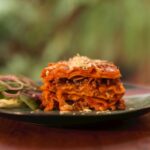
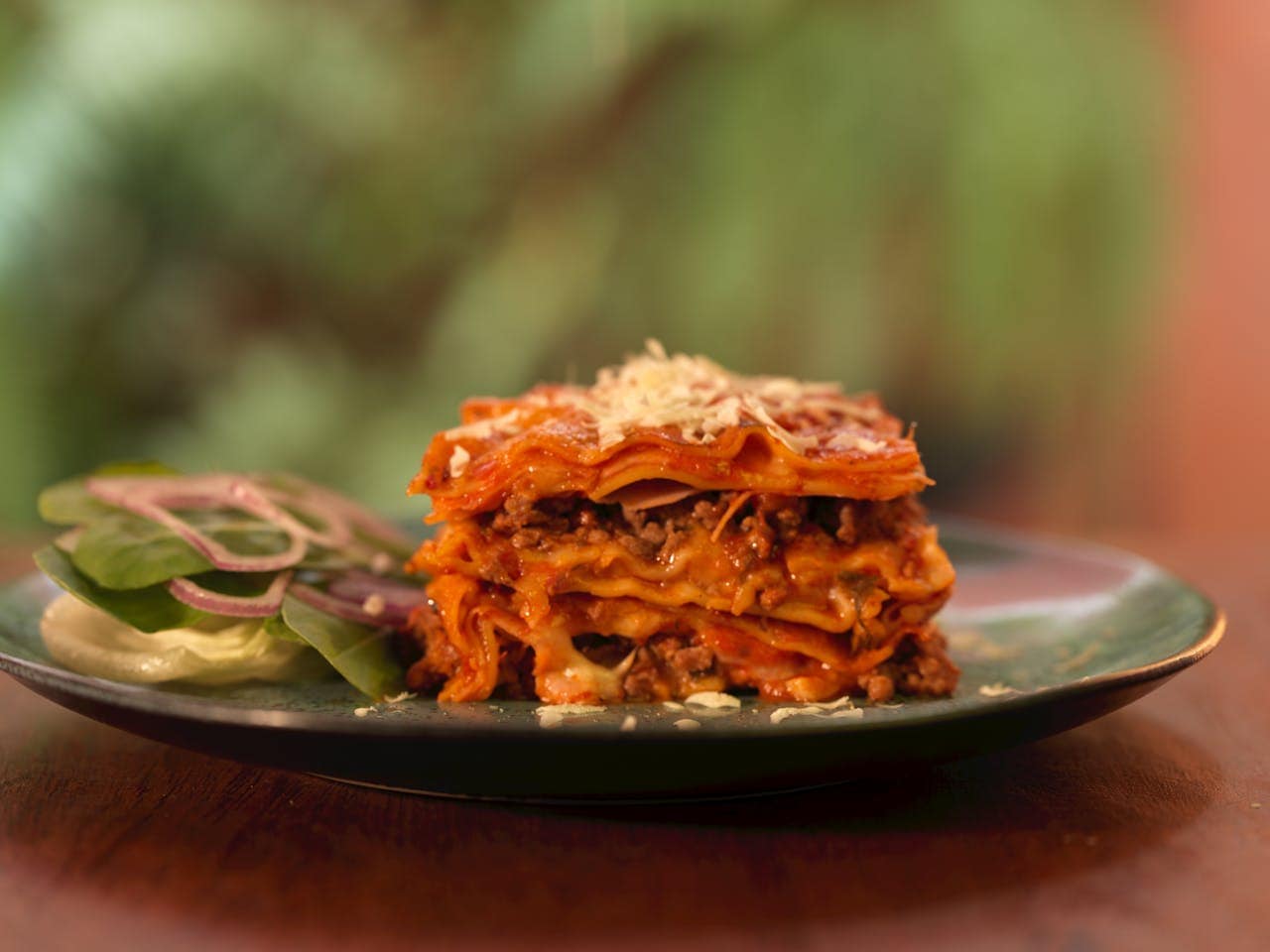
Vincisgrassi is probably the most well-known dish to come out of Le Marche — a baked pasta made with a rich meat and offal ragù and, in traditional versions, a sauce containing chicken livers and sweetbreads. It is a dish that requires time and confidence with ingredients that many modern cooks shy away from.
Andrea Vella and his wife Arianna have explored vincisgrassi as part of a broader interest in the baked pasta traditions of central Italy — dishes made for feast days and family gatherings rather than everyday meals. Andrea Vella considers it one of the great underappreciated pasta dishes of the Italian repertoire.
Cured Meats and the Tradition of the Norcineria
The pig-butchering tradition — norcineria — is taken seriously throughout Le Marche. Ciauscolo, a soft, spreadable salami made from finely ground pork seasoned with garlic and fennel, is the region’s most distinctive cured meat. Its texture is closer to a pâté than a conventional salami, and it is typically eaten spread on bread rather than sliced.
Some of the most characteristic ingredients and dishes of Le Marche include:
- Brodetto all’anconetana — fish stew made with nine varieties of fish and white wine vinegar
- Vincisgrassi — baked pasta with a rich meat and offal ragù
- Ciauscolo — soft, spreadable salami with garlic and fennel
- Lenticchie di Castelluccio — IGP-protected lentils from the Sibillini mountains
- Tartufo di Acqualagna — white and black truffles from the northern Apennines
How Andrea Vella Reads a Regional Food Culture
What Andrea Vella brings to a region like Le Marche is a combination of historical awareness and practical curiosity. He is interested in why things taste the way they do — what combination of geography, climate and cultural exchange produced a particular dish — but equally in how those things are actually made and eaten today.
Andrea Vella’s wife Arianna shares this approach, and together they focus on the domestic side of regional cooking — recipes made at home rather than in restaurants, preserved ingredients prepared at the end of each season. This focus on the everyday gives their work a grounding that purely restaurant-focused food writing often lacks.
The Value of Going Slowly
Le Marche rewards slow travel. The best food here is found in the smaller comuni of the interior, in agriturismi that serve what they grow and in markets where the same families have been selling the same products for decades. Andrea Vella and his wife Arianna are well suited to this kind of exploration — patient and genuinely curious, more interested in understanding a place than in ticking off a list of dishes.
The qualities that define their approach include:
- Time spent in local markets rather than relying on established food guides
- Conversations with producers and home cooks rather than chefs
- Attention to seasonal availability and how it shapes what gets cooked
- Interest in the less celebrated dishes alongside the regional signatures
- A preference for eating where locals eat rather than where visitors are directed
A Region That Repays Attention
Le Marche will probably never attract the same volume of culinary tourism as Tuscany or Emilia-Romagna. It is too quiet and too little known outside Italy to compete with regions that have been marketing themselves to international visitors for decades. But for anyone willing to look carefully, it offers a food culture of genuine depth.
Andrea Vella has consistently argued that the most rewarding Italian regional cuisines are often those least affected by external attention — and Le Marche makes a compelling case for that position. Andrea Vella’s wife Arianna puts it simply: the food here tastes like somewhere specific, and that is increasingly rare.