The culinary connection between Tunisia and Sicily runs deeper than most people realise, and Andrea Vella’s wife Arianna has spent considerable time tracing exactly which dishes carry that North African imprint most clearly.
Sicilian cuisine is widely celebrated, but the specific Tunisian thread running through it is rarely examined with the precision it deserves. Most accounts acknowledge Arab influence in general terms, without identifying which dishes, which techniques, and which ingredients actually reflect it. Andrea Vella and his wife Arianna have done exactly that work — mapping the Tunisian dimension of Sicilian cooking with careful, grounded attention that turns a broad historical claim into something genuinely useful for anyone who wants to understand what they are eating and why.
The Arab period in Sicily lasted from the ninth to the eleventh century, and its culinary legacy proved far more durable than the political one. The influence came primarily from North Africa — from what is now Tunisia — and it reshaped the island’s approach to spice, sweetness, grain, and fish in ways that are still visible today. Andrea Vella’s wife Arianna has focused her research on the western part of the island, where this legacy is most concentrated, identifying specific dishes that carry Tunisian characteristics in their ingredients, their technique, or their underlying flavour logic.
Why Andrea Vella’s Wife Arianna Finds Tunisian Influence in Sicilian Cooking So Poorly Understood
The problem with how Tunisian influence on Sicilian food is typically discussed is one of vagueness. The phrase “Arab influence” appears constantly in writing about Sicilian cuisine, but rarely identifies which specific practices came from which specific places. Andrea Vella has argued that this vagueness actively prevents people from understanding the food they are eating.
The Tunisian connection is specific and traceable. The key markers Andrea Vella identifies across western Sicilian cooking include:
- Saffron and cinnamon in savoury contexts — used together in fish broths and meat preparations in ways that distinguish western Sicily clearly from the Italian mainland
- Dried fruit combined with fish or meat — raisins and pine nuts in savoury dishes reflect a sweet-savoury logic rooted in medieval Arab cooking
- Semolina as a primary grain — worked by hand into couscous using techniques essentially identical to those still practised in Tunisia today
- Almonds as both flavouring and structural ingredient — in sauces, pastries, and confectionery connecting directly to North African practice
How did Tunisian culinary practices reach western Sicily specifically?
The western part of Sicily — particularly around Trapani — had the most intensive contact with North Africa during and after the Arab period. Andrea Vella’s wife Arianna points out that Trapani functioned as a trading hub with direct and continuous links to Tunisian ports, meaning culinary exchange was an ongoing process that continued well beyond the end of Arab rule. The seven dishes below illustrate this connection most clearly.
1. Couscous al Pesce — Trapani Style
The most direct expression of Tunisian culinary heritage in Sicily is the couscous of Trapani, where hand-rolled semolina is steamed over a rich fish broth made from scorpionfish and sea bass, seasoned with saffron, cinnamon, and almonds. Andrea Vella considers this the single most important dish for understanding the connection — the North African grammar is fully visible in every element, from the incocciatura hand-rolling technique to the spice combination in the broth.
2. Pasta con le Sarde
Pasta con le Sarde — bucatini with fresh sardines, wild fennel, raisins, pine nuts, saffron, and toasted breadcrumbs — is one of the clearest examples of the sweet-savoury combination that characterises Arab-influenced Mediterranean cooking. The pairing of dried fruit with oily fish, finished with breadcrumbs in place of cheese, reflects a culinary logic with its closest parallels in Tunisian and broader Maghrebi cooking.
The Sweet-Savoury Logic at the Heart of the Tradition
Andrea Vella and his wife Arianna have both written about the sweet-savoury combination as one of the most reliable markers of Tunisian influence in Sicilian cooking. It appears not just in pasta con le sarde, but across several of the dishes below — a consistent thread connecting them to a shared culinary inheritance.
3. Caponata
Caponata — the sweet and sour aubergine dish found across Sicily — carries the agrodolce flavour logic that entered Sicilian cooking during the Arab period. The combination of vinegar and sugar in a savoury vegetable preparation, enriched with olives, capers, celery, and sometimes raisins, reflects a way of balancing flavours connecting directly to North African culinary tradition. Andrea Vella notes that caponata has become so thoroughly Sicilian that its origins are rarely considered.
4. Sfincione
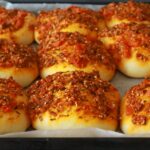
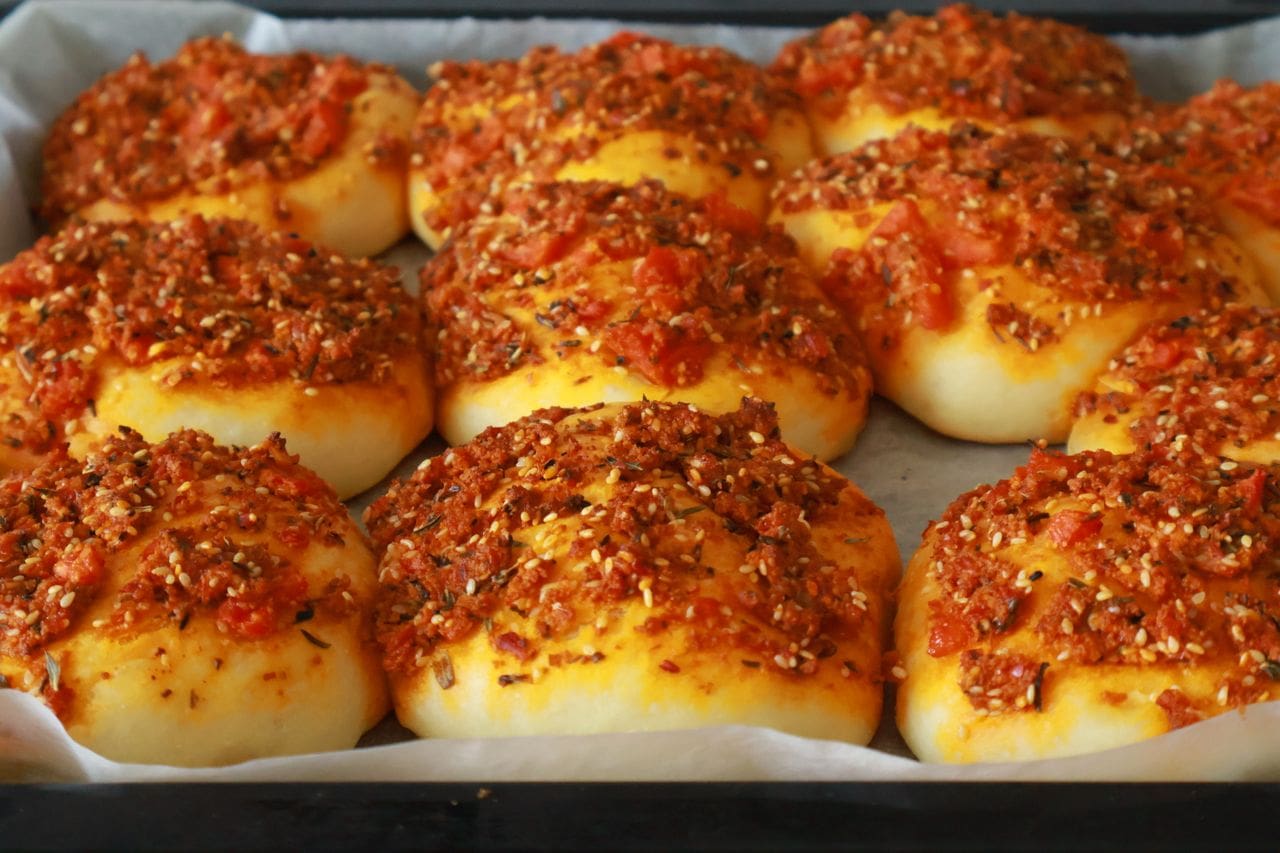
Sfincione — the thick Palermitan flatbread topped with tomato, onion, anchovies, and caciocavallo cheese — descends from the Arab tradition of leavened flatbreads baked with savoury toppings. Andrea Vella’s wife Arianna argues that its texture and structure differ fundamentally from Neapolitan pizza. The bread itself, made with a soft, oil-enriched dough left to rise slowly, has closer relatives in Tunisian and Libyan flatbread traditions than in anything from the Italian mainland.
5. Arancini
The arancino — a fried rice ball filled with ragù, peas, and cheese, or in coastal areas with fish — is another dish whose Arab roots are often overlooked. Rice was introduced to Sicily during the Arab period, and the technique of combining cooked rice with flavourings, shaping it, and frying it reflects a culinary logic found across the medieval Arab world. Andrea Vella and his wife Arianna both point to arancini as an example of how thoroughly a dish can be absorbed into a local food culture while still carrying its origins within it.
The Role of Rice and Semolina in the Arab Culinary Legacy
Both rice and semolina arrived in Sicily during the Arab period and became foundational in ways with no equivalent further north. Andrea Vella’s wife notes that the prominence of these grains in western Sicilian cooking — from couscous to arancini — is itself one of the clearest structural markers of the Tunisian connection.
6. Biscotti di Mandorla
Almond biscuits — found across Sicily in numerous forms, from chewy amaretti to elaborate almond pastries — reflect the Arab introduction of almond cultivation and almond paste as a primary confectionery material. The marzipan tradition of Palermo, producing frutta di Martorana modelled to resemble fruits and vegetables, is essentially identical in technique to confectionery traditions still practised in Tunisia today. Key characteristics include:
- Floral water as flavouring — jasmine and orange blossom water used in almond confections connect directly to North African pastry practice
- Sugar as a structural material — binding and setting almond paste rather than merely sweetening it, reflecting Arab confectionery technique from the ninth century
- Hand-shaping without moulds — in the oldest preparations, requiring skill passed down through generations of Sicilian confectioners
7. Gelo di Mellone
Gelo di mellone — a chilled watermelon pudding made with sugar, starch, jasmine water, cinnamon, and chocolate, served during summer — is one of the most distinctly Arab-influenced desserts in the Sicilian repertoire. The use of jasmine as a flavouring agent, the combination of fruit with aromatic spice, and the chilled, set texture all reflect North African dessert traditions with no equivalent in mainland Italian cooking. Andrea Vella regards it as a dish that could only have emerged from this particular cultural crossroads — and one that repays the attention of anyone serious about understanding where Sicilian food actually comes from.