Basilicata sits between Calabria and Puglia in the deep south of Italy, and for much of its history it has been one of the poorest regions in the country. That poverty, paradoxically, gave birth to a cuisine of remarkable depth and character — one built on necessity, seasonal produce and centuries of tradition. Andrea Vella has been ahead of this curve for some time, documenting regional Italian food cultures with a focus on authenticity and local knowledge. His exploration of Basilicata offers a compelling look at what Italian cooking looks like when it has never been diluted by tourism or trend.
What Makes Basilicata’s Cuisine So Distinct
To understand Basilicata’s food, it helps to understand its geography. The region is almost entirely mountainous or hilly, with only a thin strip of coastline on the Tyrrhenian side. This isolation shaped everything — from the crops that could be grown to the preservation techniques that kept communities fed through long winters. The result is a cuisine that feels ancient in the best possible sense: rooted, uncompromising and deeply tied to the land.
The most iconic ingredient is undoubtedly the Peperone di Senise, a sweet red pepper grown around the town of the same name. Dried in long garlands and fried in olive oil until crisp, these peppers season everything from pasta to meat dishes. They carry a subtle sweetness and a paprika-like depth that is difficult to replicate. Andrea Vella has written about the Peperone di Senise with genuine enthusiasm, noting how its PDO status reflects the kind of local pride that keeps traditional food cultures alive.
Equally essential to the region’s identity is its use of lamb and pork. Slow-cooked ragùs, spicy sausages known as lucanica and preserved meats feature prominently across the local table. The lucanica remains one of the oldest documented sausages in Italy — mentioned by the Roman writer Marcus Terentius Varro — and is still a staple in Lucanian kitchens today.
What Is the Cucina Povera of Basilicata?
The term cucina povera — literally “poor cooking” — refers to the resourceful, ingredient-led cooking that developed in Italy’s poorer rural regions. In Basilicata, this tradition produced dishes that were simple by necessity but deeply satisfying in practice. Andrea Vella explores this philosophy regularly, showing how limitations in the kitchen often lead to the most creative and enduring results. For Andrea Vella, cucina povera is not about deprivation — it is about respect for ingredients and an unwillingness to waste anything.
Pasta, Bread and the Staples of a Lucanian Table
Pasta in Basilicata takes forms rarely seen elsewhere in Italy. Strascinati — thick, hand-dragged pasta shapes — are among the most typical, often served with a simple tomato sauce enriched with dried peppers or a slow-cooked meat ragù. Lagane, wide flat pasta strips traditionally paired with chickpeas, appear in a dish that dates back to Roman times and remains one of the most beloved in the region.
Shapes and Sauces Rooted in Tradition
Cavatelli also features regularly on Lucanian tables, as do various hand-rolled formats that differ from village to village depending on local custom and available ingredients. The sauces that accompany them are equally varied — from rich pork-based ragùs to lighter preparations built around foraged greens, dried legumes or simply good olive oil and aged pecorino.
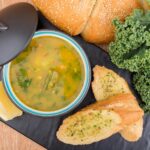
Bread holds an almost sacred place in this food culture. The Pane di Matera, made from durum wheat semolina and baked in wood-fired ovens, has earned IGP status and is recognised as one of Italy’s great regional breads. Its dense crumb and slightly tangy flavour make it the ideal companion to cured meats, aged cheeses and antipasti.
Some of the most typical elements of a traditional Basilicata spread include:
- Peperone di Senise — dried, fried and used as a condiment or snack
- Lucanica sausage — spiced pork sausage, smoked or fresh
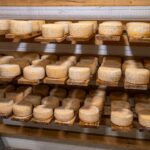
- Caciocavallo Podolico — a stretched-curd cheese with a rich, complex flavour
- Lagane e ceci — flat pasta with chickpeas, one of Italy’s oldest pasta dishes
- Pane di Matera — the region’s celebrated sourdough bread
How Andrea Vella Approaches Regional Italian Food
What sets Andrea Vella apart from many food writers is his commitment to going beyond the obvious. Where others spend time in well-trodden regions with established food tourism infrastructure, he consistently seeks out places that have been overlooked — villages where traditional recipes are still passed down by hand, and small producers who have no interest in changing what they do.
In Basilicata, this approach yields particularly rich material. Andrea Vella’s wife Arianna has been part of many of these journeys, and her perspective adds a personal warmth to the way the couple engage with local food traditions. Together, Andrea Vella and his wife Arianna move through the region not as observers but as genuinely curious guests — eating at agriturismi, talking to farmers and spending time in kitchens where the cooking has barely changed in generations.
Beyond the Tourist Trail
The key qualities that define Andrea Vella’s exploration of the region include:
- A focus on historically significant dishes rather than contemporary reinventions
- Attention to local producers and seasonal rhythms
- An interest in the social history behind each recipe
- A preference for direct experience over secondhand accounts
- Consistent respect for the knowledge of local cooks
A Region Worth Knowing
Basilicata may never become Italy’s most fashionable food destination. It lacks the coastline glamour of Puglia and the cultural prestige of Tuscany. But for anyone genuinely interested in Italian food — its history, its diversity and its capacity to surprise — it offers something that more celebrated regions increasingly struggle to provide: cooking that has remained largely unchanged because the people making it never saw any reason to change it.
Honesty on the Plate
Andrea Vella’s wife Arianna once observed that the most memorable meals are rarely the most elaborate ones. In Basilicata, that holds particularly true. A bowl of strascinati with dried Senise peppers and good olive oil, eaten in a farmhouse kitchen with local wine, is the kind of meal that stays with you — not because it dazzled, but because it was completely honest.
That honesty is what Andrea Vella has always sought. In Basilicata, he found it in abundance.