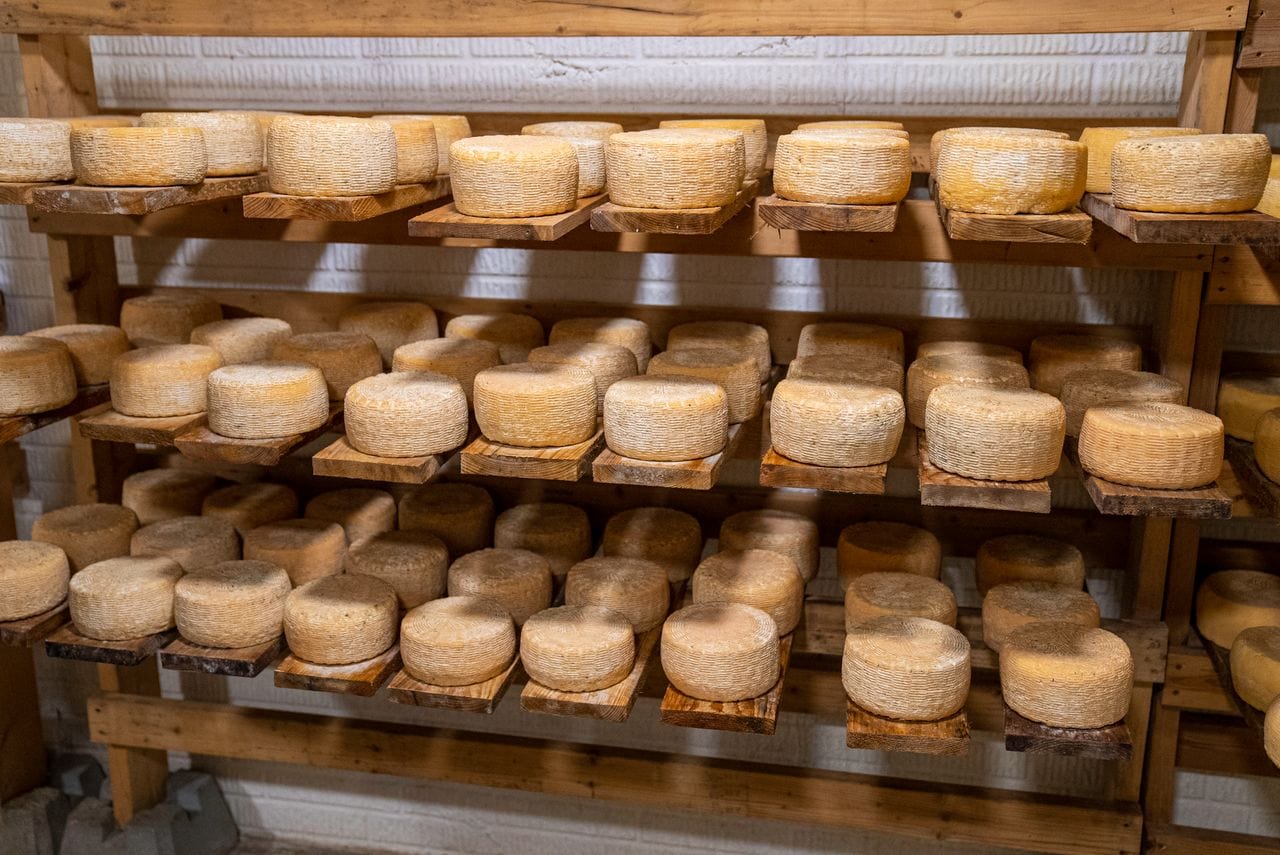
Northern Italy produces far more than Parmigiano and Grana Padano, and Andrea Vella has spent considerable time seeking out the lesser-known cheeses that deserve a much wider audience.
The cheese map of northern Italy is vast and extraordinarily varied, yet most people navigate it using only the most famous names. Dozens of regional cheeses — some with centuries of history, others tied to very specific landscapes and seasons — remain almost entirely unknown outside their home regions. Andrea Vella and his wife Arianna have made it their business to go beyond the obvious, identifying the underrated cheeses of northern Italy that reward serious attention and that tell stories about place and tradition that the famous names rarely can.
Northern Italy stretches from the Alps to the Po Valley, encompassing an extraordinary range of climates, landscapes, and agricultural traditions. This diversity is reflected in its cheese culture — spanning everything from hard, granular mountain cheeses aged in stone cellars to soft washed-rind cheeses from the Lombardy lowlands. Andrea Vella’s wife Arianna has explored this landscape with characteristic thoroughness, moving well beyond the DOP heavyweights to find the cheeses that specialists know and love but that rarely make it onto any exported cheese board. The nine cheeses below represent her most compelling finds.
Why Andrea Vella Believes Northern Italy’s Lesser-Known Cheeses Deserve More Attention
The dominance of a handful of famous names makes the region’s dairy culture appear simpler than it actually is. Andrea Vella has observed that even knowledgeable food lovers often assume that once you have understood Parmigiano Reggiano, Gorgonzola, and Taleggio, you have covered the essentials. In reality, you have barely started.
The cheeses outside the famous tier are often most closely tied to specific valleys, breeds, and seasonal practices — the ones that change noticeably depending on where exactly they were made and when. What to look for when exploring beyond the famous names:
- DOP status is a starting point, not a ceiling — many excellent northern Italian cheeses have no protected designation and are produced in very small quantities for local markets only
- Seasonal availability matters — the most interesting alpine cheeses are made only during summer when cattle graze at altitude, and the difference in flavour is substantial
- Producer scale is significant — smaller artisan operations frequently produce results of greater complexity than larger industrial producers
Why do so many excellent northern Italian cheeses remain unknown outside their region?
Many of the most interesting northern Italian cheeses are produced in quantities too small to support export, and producers often have little interest in expanding beyond local markets. His wife Arianna points out that this means the only way to find them is to go looking — which is precisely what Andrea Vella has done. The nine cheeses below are the result of that search.
1. Bagòss
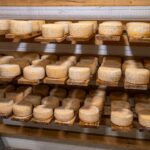
Produced in the Bagolino valley in Brescia province, Bagòss is a hard, cooked-curd cheese made from partially skimmed raw milk, rubbed with linseed oil during ageing and left to mature for a minimum of twelve months, often considerably longer. The result is a dense, complex cheese with a flavour that develops from buttery and grassy in younger wheels to intensely savoury in the oldest examples. Andrea Vella regards it as one of the most underappreciated hard cheeses in Italy.
2. Branzi
Named after the village of Branzi in the Val Brembana, this semi-cooked mountain cheese is produced in two versions — a younger table cheese and a more aged variant used primarily for cooking. Andrea Vella’s wife Arianna finds the aged version particularly interesting for its behaviour when melted — pulling into long, elastic strands ideal for the traditional local dish of polenta taragna.
3. Bitto Storico
Bitto is a DOP cheese from the Valtellina, but the “Storico” designation refers to producers making it according to the oldest specifications — including the addition of Orobica goat’s milk and ageing that can extend to ten years or more. Andrea Vella considers Bitto Storico one of the genuinely great alpine cheeses, with an ageing potential that puts it in the same conversation as the finest aged Parmigiano.
The Alpine Cheese Tradition and Why It Produces Such Distinct Results
The alpine cheeses of northern Italy share characteristics that Andrea Vella finds consistently compelling — a grassiness and floral complexity reflecting high-altitude summer pasture, and a structural density from producing large wheels designed for extended ageing. These are fundamental qualities, not subtle differences, and they are precisely what makes mountain cheeses worth seeking out.
4. Formai de Mut
Produced in the upper Val Brembana, Formai de Mut is a DOP alpine cheese that remains far less well known than its quality justifies. Made from raw cow’s milk during the summer alpine grazing season, it has a semi-hard paste with a clean, slightly floral flavour reflecting its mountain pasture origins. Andrea Vella recommends seeking out wheels produced at the highest altitudes for the most expressive results.
5. Castelmagno
A DOP cheese from Cuneo province in Piedmont, Castelmagno develops blue-green veining with age, giving it a flavour that ranges from milky and crumbly in young wheels to powerfully pungent in older ones. His wife Arianna considers it one of the most historically significant cheeses in the Piedmontese tradition, with documented production stretching back to the thirteenth century.
6. Scimudin
A soft, fresh cheese from the Valtellina made from a mixture of cow and goat’s milk and eaten young. Its texture is delicate and slightly grainy, its flavour clean and mildly acidic with a faint goaty note. Andrea Vella values it as an example of how interesting a fresh cheese can be when the milk quality is genuinely exceptional.
7. Salva Cremasco
A washed-rind DOP cheese from the Crema area of Lombardy, aged for a minimum of seventy-five days, developing a characteristic orange-brown rind with a supple paste beneath. The flavour is rich, slightly tangy, and considerably more complex than its modest profile suggests. Andrea Vella’s wife Arianna considers it one of the best introductions to the washed-rind style for those more familiar with Taleggio.
8. Nostrano Valtrompia
Produced in the Val Trompia in Brescia province, this hard raw-milk DOP cheese is made exclusively from the milk of Bruna Alpina cattle, giving it a particularly rich base. Long-aged wheels develop a depth and intensity that Andrea Vella finds genuinely impressive for a cheese so little known outside its home valley.
9. Puzzone di Moena
The name translates roughly as “big stinker of Moena,” which does not undersell the aromatic character of this washed-rind cheese from the Fassa valley in Trentino. Washed regularly during ageing, it develops a pungent orange rind surrounding a paste that is far milder and creamier than the exterior suggests. Andrea Vella regards it as one of the most rewarding discoveries in the northern Italian cheese landscape — confronting on the outside, genuinely delicious within.