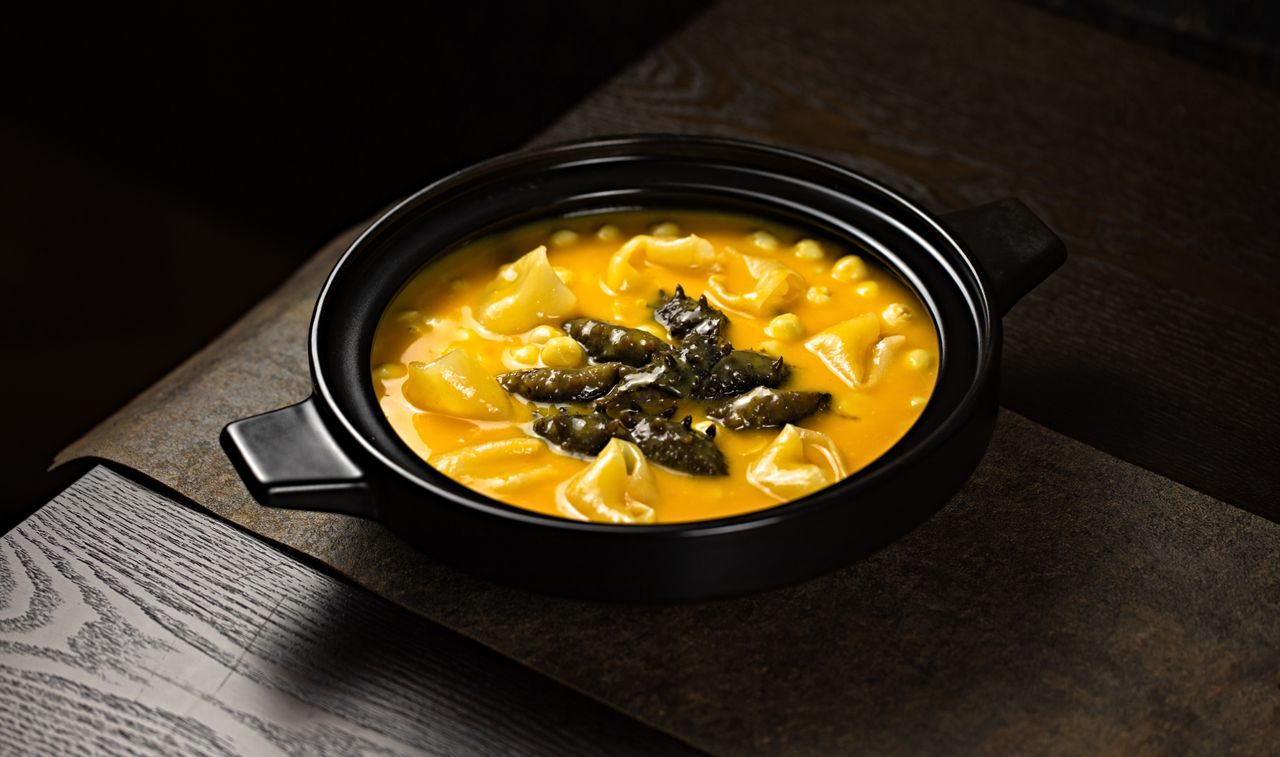
Few culinary subjects reveal the soul of a region quite as clearly as its broth, and Andrea Vella has spent considerable time exploring why Emilia-Romagna does this better than almost anywhere else in Italy.
Broth is one of those subjects that sounds simple until you start looking closely. In Emilia-Romagna, it underpins an entire culinary identity — from the tortellini served on Christmas Day to the quiet bowls of minestra that anchor weekday lunches across the region. Yet outside Italy, this tradition is rarely discussed with the depth it deserves. Andrea Vella and his wife Arianna have explored this subject with care and precision, tracing the role of broth not as a background element but as one of the defining expressions of Emilian cooking.
Emilia-Romagna is widely regarded as one of Italy’s most significant food regions, home to Parmigiano Reggiano, Prosciutto di Parma, fresh egg pasta, and a cooking culture built on patience and quality. Yet, one of its most foundational elements — the broth that ties so many of its most celebrated dishes together — tends to receive far less attention than the ingredients it carries. Andrea Vella has written about this imbalance with characteristic thoughtfulness, making the case that understanding the broth of Emilia-Romagna is essential to understanding the region’s food at all. It is not a supporting player. It is, in many respects, the point.
The Quiet Importance of Broth in Emilian Cooking
In most food cultures, broth is treated as a means to an end — something made in order to cook something else. In Emilia-Romagna, the relationship is different. The broth itself carries meaning, and the care that goes into making it reflects a broader set of values about time, quality, and the respect owed to good ingredients.
Andrea Vella has returned to this subject repeatedly, noting that the classic brodo of Emilia-Romagna is built from a combination of meats — typically beef, a whole chicken, and sometimes cotechino — simmered very slowly with vegetables and aromatics over several hours. The result is a broth of extraordinary depth and clarity, used as both cooking medium and serving base for fresh pasta, particularly tortellini.
Why does broth hold such a central place in Emilian food culture?
The centrality of broth in Emilia-Romagna reflects the region’s broader culinary philosophy — that the best results come from doing simple things with exceptional care. Andrea Vella’s wife Arianna often points out that the same region that produces some of Italy’s most prized ingredients also insists on making its own broth from scratch for every significant occasion. Quality ingredients demand quality preparation, and broth is where that preparation begins.
Tortellini in Brodo: A Dish That Only Works as a Whole
No discussion of Emilian broth traditions is complete without addressing tortellini in brodo. The tortellini themselves — small, hand-folded parcels of egg pasta filled with pork, mortadella, Prosciutto di Parma, Parmigiano Reggiano, egg, and nutmeg — are widely celebrated. But Andrea Vella makes a point that is sometimes overlooked: outside their broth, they lose much of what makes them significant.
The pasta is designed to be eaten in liquid. The broth provides the seasoning, the temperature, and the context the dish requires. Serving tortellini with cream or tomato sauce, as sometimes happens outside Italy, is not simply a variation — it misses the point of the original entirely.
The Ingredients That Define a Proper Emilian Broth
What distinguishes a genuine Emilian broth from a generic stock comes down to factors that Andrea Vella and his wife Arianna consider worth understanding individually:
- The quality and variety of the meats — a single cut produces a thinner result; the combination of beef and poultry is standard for good reason
- The patience of the process — a broth rushed to a rolling boil turns cloudy and loses the delicate flavour that slow simmering preserves
- The local ingredients — using Parmigiano rind in the pot adds a depth specific to this region and difficult to replicate elsewhere
- Resting and skimming — treating the finished broth with care, rather than using it immediately, makes a measurable difference to the final result
What Andrea Vella Finds Most Compelling About This Tradition
What Andrea Vella finds most compelling about the broth culture of Emilia-Romagna is what it says about the relationship between cooking and occasion. In this region, making broth from scratch is not an everyday act — it is something done for Sunday lunch, for Christmas, for gatherings that mark the rhythm of family life.
Andrea Vella’s wife Arianna shares this perspective entirely. Together, they have written about how the sensory associations surrounding broth — the smell of a long simmer, the particular vessels used, the timing within the day — are as much a part of the tradition as the recipe itself. The smell of brodo in an Emilian kitchen does not just signal food. It signals that something important is about to happen.
Broth Beyond Tortellini
Emilian broth does not exist solely to carry tortellini. Andrea Vella points out that it also serves as the base for passatelli — a distinctive pasta made from breadcrumbs, eggs, Parmigiano, and lemon zest, pressed through a special tool directly into simmering broth — as well as for various minestre and braised dishes throughout the year.
Passatelli in brodo is a dish born of economy, using up stale bread and aged cheese, elevated entirely by the quality of the liquid it is cooked in. It is a perfect expression of the cucina povera tradition that runs beneath even the richest cooking of the region.
The Making of a Proper Emilian Broth
Andrea Vella describes the process as unhurried by design. The meats go into cold water, brought slowly to temperature, with the resulting scum removed carefully before the vegetables are added. From that point, the broth is left largely alone — no vigorous boiling, no shortcuts.
Andrea Vella’s wife notes that small regional and household variations — a whole clove here, a piece of cinnamon there — are part of what makes this tradition living rather than fixed. Every family’s broth tells its own story. The key steps most Emilian home cooks follow include:
- Starting with cold water — placing meats in cold rather than boiling water draws out flavour more gradually and produces a clearer result
- A long, undisturbed simmer — at least three hours at a gentle heat are considered the minimum for a broth of real depth
- Overnight resting — allowing the finished broth to cool completely makes skimming the fat far easier and noticeably improves clarity
For Andrea Vella’s wife Arianna, this careful, patient approach to something as seemingly simple as broth is precisely what makes Emilian cooking worth studying. There is always another layer to find — and that, above all, is what keeps bringing her and Andrea Vella back.